Skip to product information
1 of 8

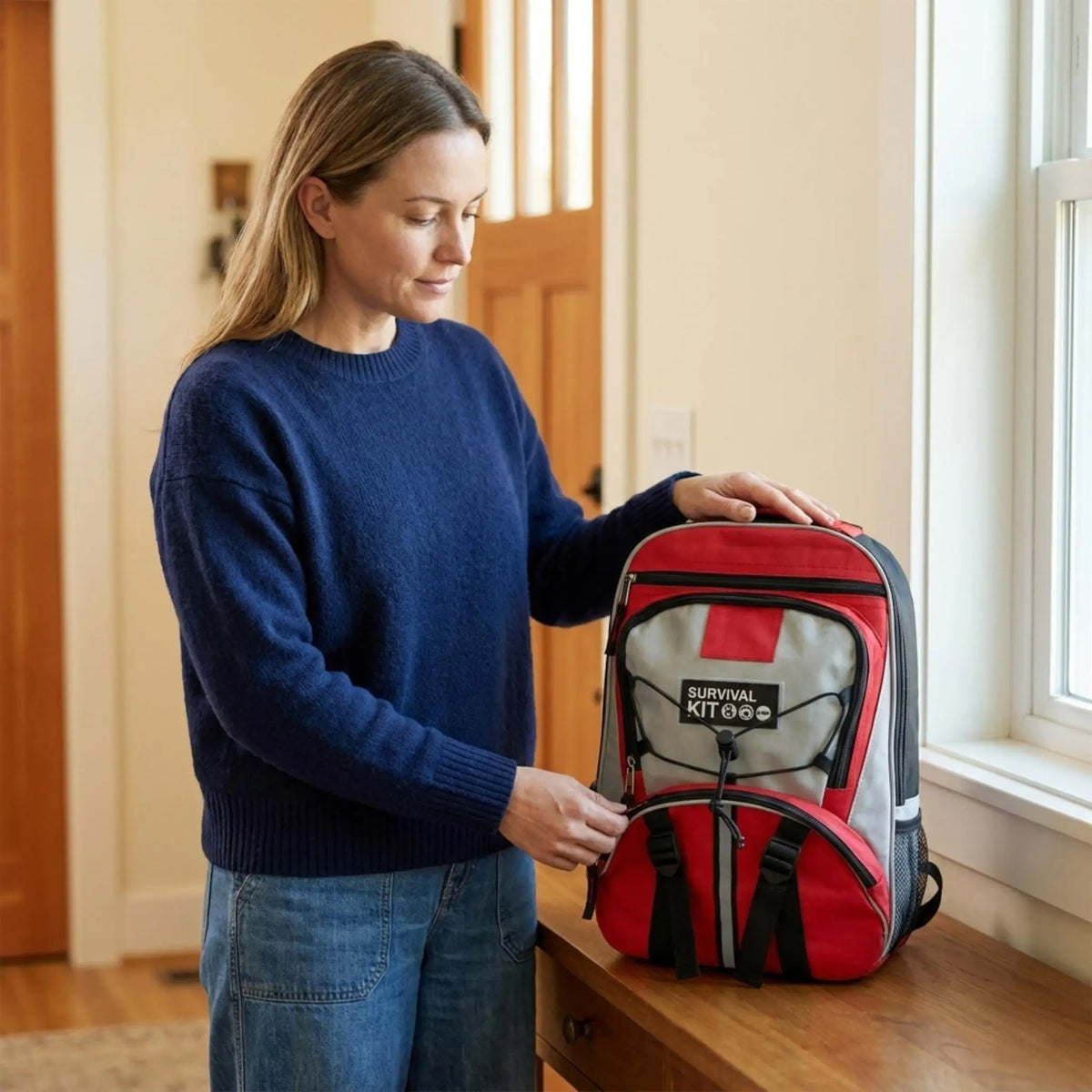
Home Emergency Survival Kit - The NightWatch

Home Emergency Survival Kit - The NightWatch

Regular price $74.95 USD
Regular price Sale price $74.95 USD
Sale Sold out
Quantity

Ships in 1–3 business days • 30-day returns • Free shipping over $100

Product Highlights

  • Emergency kit for a family of four, packed in a multi-pocket hiker's backpack with components sorted into waterproof bags
  • Hand-assembled in the USA, designed with advice from emergency preparedness experts, and following guidelines from government agencies and nonprofit preparedness organizations
  • Two hand-rechargeable flashlights that need no batteries, plus an emergency lantern, waterproof matches, emergency candles, and bright sticks
  • AM/FM radio with batteries included, for local news and emergency broadcasts when your phone is dead or the network is down
  • Four emergency survival sleeping bags and four body warmers, one of each per person
  • First aid for everyday injuries (cuts, scrapes, sprains, and splinters), with finger splints, an elastic bandage, an instant cold pack, gauze pads in three sizes, and a first aid guide in a reusable case
  • Survival playing cards: 52 cards illustrating real survival skills, and something to do during a long, dark evening
  • No food, water, or water treatment included, so store food and water at home alongside it, or pair it with a 72-hour kit that includes food
  • 16" × 12" × 6" and 7 lbs, light enough for one person to carry and small enough for a hall closet

The lights go out at seven on a January evening, and the furnace goes quiet with them. Nobody is in danger. Still, the house starts to cool, the kids have questions, and the flashlight you were sure was in the kitchen drawer isn't there.

That kind of emergency isn't dramatic. It's uncomfortable, and it can last for days.

The NightWatch is built for that stretch. It brings light, warmth, information, and first aid for a family of four, packed into one backpack and organized in waterproof bags. It's ready to carry to the basement or out to the car.

Why families choose the NightWatch:

Light that doesn't depend on batteries you forgot to buy. Two hand-rechargeable flashlights need no batteries. Alongside them are an emergency lantern, a box of waterproof matches, two emergency candles, and two emergency bright sticks.

Warmth for a house with no heat. Four emergency survival sleeping bags and four body warmers give you one of each for every person in a family of four.

Information without a phone. An AM/FM radio with batteries included lets you follow local news and emergency broadcasts when the network is down or your phone is at 4%.

First aid for everyday injuries. Cuts, scrapes, sprains, and splinters are the injuries that happen when the house is dark and people are moving around it. The kit includes finger splints, an elastic bandage, an instant cold pack, gauze pads in three sizes, and a first aid guide, all in a reusable case.

Something to do. Fifty-two survival playing cards each illustrate a real survival skill. A long evening without power goes by faster with a deck of cards.

Light enough to move. At seven pounds and 16" × 12" × 6", one person can carry it to the basement during a tornado warning, or out to the car if you need to leave.

What's not in here. There's no food, no water, and no way to treat water. This kit covers light, warmth, and first aid. Keep food and water at home alongside it, or pair it with a 72-hour kit that includes food. Our Guardian Go Bag carries food, drinking water pouches, and a way to treat more water.

The NightWatch is hand-assembled in the USA. It was designed with advice from emergency preparedness experts and follows guidelines from government agencies and nonprofit preparedness organizations.

Every item we sell sends one dollar to the National Forest Foundation, and the NightWatch is no exception.

Light, warmth, and first aid, packed and ready for the next time the lights go out.

Who This Kit Is For

This kit is for families who want to be ready for the emergencies that show up in ordinary years: a multi-day power outage, a winter storm that takes the heat with it, or a tornado warning that sends everyone to the basement.

It suits households that already keep food and water on hand and need the other half. That means light, warmth, information, and first aid, organized in one place instead of scattered across four drawers.

It also works well as a second kit. If you already own a 72-hour kit with food, the NightWatch can cover a different floor or a family member's home.

Choosing the right number

  • One to three people: one kit covers everyone, with sleeping bags and body warmers to spare.
  • Four people: one kit, with one sleeping bag and one body warmer per person.
  • Five or more: one kit plus an emergency sleeping bag and body warmer for each additional person, or a second NightWatch for another floor.

What's Included

Organization

  • 1 Multi-Pocket Hiker's Backpack
  • Components packed in waterproof bags

Light & Communication

  • 1 AM/FM Radio (batteries included)
  • 1 Emergency Lantern
  • 2 Hand-Rechargeable Flashlights (no batteries required)
  • 1 Box of Waterproof Matches
  • 2 Emergency Candles
  • 2 Emergency Bright Sticks

Shelter & Warmth

  • 4 Emergency Survival Sleeping Bags
  • 4 Body Warmers


First Aid

  • A Deluxe First Aid Kit in a reusable case, containing:

    Adhesive bandages in two sizes
    Gauze pads (2", 3", and 4") and a 2" roll of gauze
    Alcohol pads and cotton-tip applicators
    2" elastic bandage
    Finger splints
    Instant cold pack
    Medical tape
    Tweezers
    First aid guide

    Other

    1 Deck of Survival Playing Cards (52 cards illustrating survival skills)

    Not included: food, water, water treatment, or burn care supplies.

    What You'll Still Want to Add
  • Water. Ready.gov, FEMA's preparedness campaign, recommends one gallon per person per day. For a family of four over three days, that's twelve gallons.
  • Food that needs no cooking.
  • Medications. The American Red Cross recommends a seven-day supply, along with any medical items your family relies on.
  • Copies of important documents.
  • Glasses, contact lens supplies, and hearing aid batteries for anyone who uses them.

Scenarios This Kit Covers

Extended power outages. This is the core use. Two flashlights, a lantern, candles, and bright sticks spread light through the house, and the radio keeps you informed when the network is down. The sleeping bags and body warmers matter most when the outage takes the furnace with it.

Winter storms. Four emergency sleeping bags and four body warmers help in a house losing heat. The waterproof matches work for candles or a wood-burning fireplace. Never use a gas stove or oven to heat your home.

Tornado and severe storm warnings. At seven pounds, one person can carry the kit to the basement in one trip, with first aid and light to wait it out. The radio is AM/FM, so a NOAA weather radio is a good companion for alerts.

Evacuation, partially. Everything packs into a backpack and goes with you. With no food or water, though, this kit supplements a 72-hour kit rather than replacing one.

Pro Tips

Test the flashlights when the kit arrives. Charge each one by hand and make sure it lights. Repeat twice a year so you know they work before you need them.
Know your radio. This is an AM/FM radio, not a NOAA weather radio. If severe weather is common where you live, a NOAA weather radio brings watches and warnings directly instead of waiting for a local station to break in.
Know what this first aid kit is and isn't. It handles everyday injuries: cuts, scrapes, sprains, and splinters. It has no burn supplies, so a tube of burn gel is an inexpensive addition. It is not a trauma kit. If you want coverage for a serious bleed, a dedicated trauma kit with a tourniquet is worth owning alongside this one. It's also worth learning to use before you need it.
Keep it where you can reach it in the dark. A hall closet, the top of the basement stairs, or a bedroom closet all work well.
Check the radio batteries twice a year. They're included and will eventually need replacing. Pair the check with the spring and fall clock changes, and you won't have to remember a date.
Use the flashlights first and the candles second. If you do light the candles, set them on a plate or holder away from anything a child or pet could knock over. Never leave them burning unattended.

Size & Storage

The kit measures 16" × 12" × 6" and weighs 7 lbs. It's small enough for a hall closet shelf, a coat closet floor, or under a bed, and light enough for one person to carry in a single trip. Indoors is best. A parked car or an unheated garage runs hot in summer and cold in winter, which is hard on batteries and first aid supplies.

Good to Know...

Outages happen, even in ordinary years. The average U.S. electricity customer went 11 hours without power in 2024, nearly double the yearly average of the decade before, according to the U.S. Energy Information Administration. Major storms caused most of those hours. Even in a typical year, smaller outages add up to about two hours.

Common question: "Why doesn't this kit have food or water?"

Because it isn't a 72-hour kit. Food and water are heavy, and they expire, so they're easier to keep on a shelf at home than in a backpack you check twice a year. The NightWatch covers the part of an emergency a pantry can't: light when the power's out, warmth when the heat's off, information when the network is down, and first aid when someone gets hurt in the dark.

If you'd like a kit that includes food, the Guardian Go Bag carries food, drinking water pouches, and a way to treat more water, for two or four people.

View full details
Home Emergency Survival Kit - The NightWatch $74.95