Skip to product information
1 of 11

72-Hour Emergency Survival Kit - The RapidShield

72-Hour Emergency Survival Kit - The RapidShield

Regular price $101.95 USD
Regular price Sale price $101.95 USD
Sale Sold out
Color
Size
Quantity

Ships in 1–3 business days • 30-day returns on eligible items • Free shipping over $100

Product Highlights

  • 72-hour emergency kit for 2 or 4 people, a pre-packed grab and go bag ready when you need it
  • USA-made, US Coast Guard-approved SOS food rations supplying 1,200 calories per person per day, no reheating or rehydration needed
  • US Coast Guard-approved SOS drinking water pouches, 5-year shelf life
  • Personal straw water filter rated for up to 1,321 gallons, with a 0.1-micron ultrafilter for bacteria and protozoa and a carbon filter that improves taste and odor
  • AM/FM weather band radio covering the frequencies NOAA and public safety alerts broadcast on, batteries included
  • First aid kit, safety goggles, multitool knife, and signal whistle
  • Emergency Preparedness Guidebook covering hurricanes, earthquakes, wildfires, and more
  • 2-person at 12 lbs, 4-person at 21 lbs across two packs, with room left for your medications and documents

Most families know they should be prepared. The RapidShield makes it easy to actually get there.

This home emergency survival kit was built for individuals and families who want real emergency coverage without complexity or a high price tag. No cutting corners, just the essentials carefully chosen and packed as a ready go bag you can grab the moment you need it.

Whether you're facing a hurricane, earthquake, flood, wildfire, power outage, or evacuation order, the RapidShield gives you food, first aid, shelter, light, communication, and a way to improve the water you find. It covers the gear side of the first 72 hours and leaves room for the personal items only you can pack.

What sets the food apart: the USA-made, US Coast Guard-approved SOS brand food rations supply 1,200 calories per person per day and require no rehydration and no reheating. They were formulated with low sodium content so they won't make you thirstier in a crisis. The SOS water pouches are USA made and Coast Guard approved as well, and both carry a 5-year shelf life.

That matters more than it sounds. Ration bars need no water at all, so every drop you have goes to drinking. Freeze-dried meals need clean water and heat to prepare, which are the two things hardest to come by in an emergency.

About the water filter, plainly. The kit includes a personal straw filter rated by the manufacturer for up to 1,321 gallons. It pairs a 0.1-micron ultrafilter, which removes bacteria and protozoa such as Giardia and Cryptosporidium, with a carbon filter that improves taste and odor. Drink through it directly or attach it to a water bottle, and clean it by backwashing. It is a filter rather than a purifier. It can't reliably remove viruses, and no filter makes water contaminated with chemicals or fuel safe to drink. If you're treating water of unknown quality, pair it with purification tablets or drops. The water pouches cover the first hours, and the filter extends what you can do with water you find after that.

An AM/FM weather band radio covers the frequencies NOAA weather services and public safety alerts broadcast on, so you stay informed when cell service goes down. Batteries are included and packed separately rather than installed, which keeps them from corroding inside the devices during storage.

A first aid kit for cuts, scrapes, and blisters, safety goggles, signal whistle, multitool knife, light sticks, flashlight, weather protection, hygiene supplies, and our Emergency Preparedness Guidebook round out the kit.

Which size? The 2-person kit covers two people for 72 hours in one backpack at 12 pounds. The 4-person covers four in two backpacks at 21 pounds total, so the load can be split between two adults. If you live alone, the 2-person size gives you roughly six days of food instead of three. For households of three or five, size up rather than down.

A note on the 4-person kit. The two backpacks are not identical. Some items come as singles rather than pairs, including the flashlight, the radio, the multitool, and the first aid kit. Open both when your kit arrives and split those between the bags, so neither adult is left without light or first aid. It takes about ten minutes and it's the most useful thing you can do with a new kit.

Buying for a senior parent or grandparent? Choose the 2-person size. Keep the kit somewhere reachable without stairs, and consider whether the person receiving it can comfortably move the 12-pound pack if it needs to be used as a grab-and-go kit. It is meaningfully lighter than the 4-person version.

Wildfire season note: This kit is designed with room for your personal additions. If wildfire is a risk in your area, we recommend tucking in a NIOSH-marked N95 respirator for everyone it fits, plus a paper map of your local evacuation routes. NIOSH approves no respirators for children. Some older children can get a good seal with an adult-small size, but fit depends on the child's face, not their age. For younger children, the plan is filtered indoor air and leaving early. Children under two should not wear a mask. Both additions are inexpensive and they close the two biggest gaps in any pre-packed bag. No kit sold anywhere is wildfire-complete, ours included. Not sure whether a mask is genuine? Here is how to check. Our wildfire evacuation plan guide covers what to add and how to use it.

What you'll add yourself. No pre-packed kit can include the things specific to your household. Prescription medications are the big one, and the Red Cross recommends keeping a seven-day supply. Copies of insurance cards, IDs, and medical records in a waterproof bag come next, along with a phone charger and anything your family genuinely can't do without. Water purification tablets are worth adding alongside the filter. The first aid kit handles cuts and scrapes well, so if anyone in your household needs more than that, gloves, gauze, and tape are worth adding. If you're just getting started, our Be Ready Basics guide walks through the whole picture.

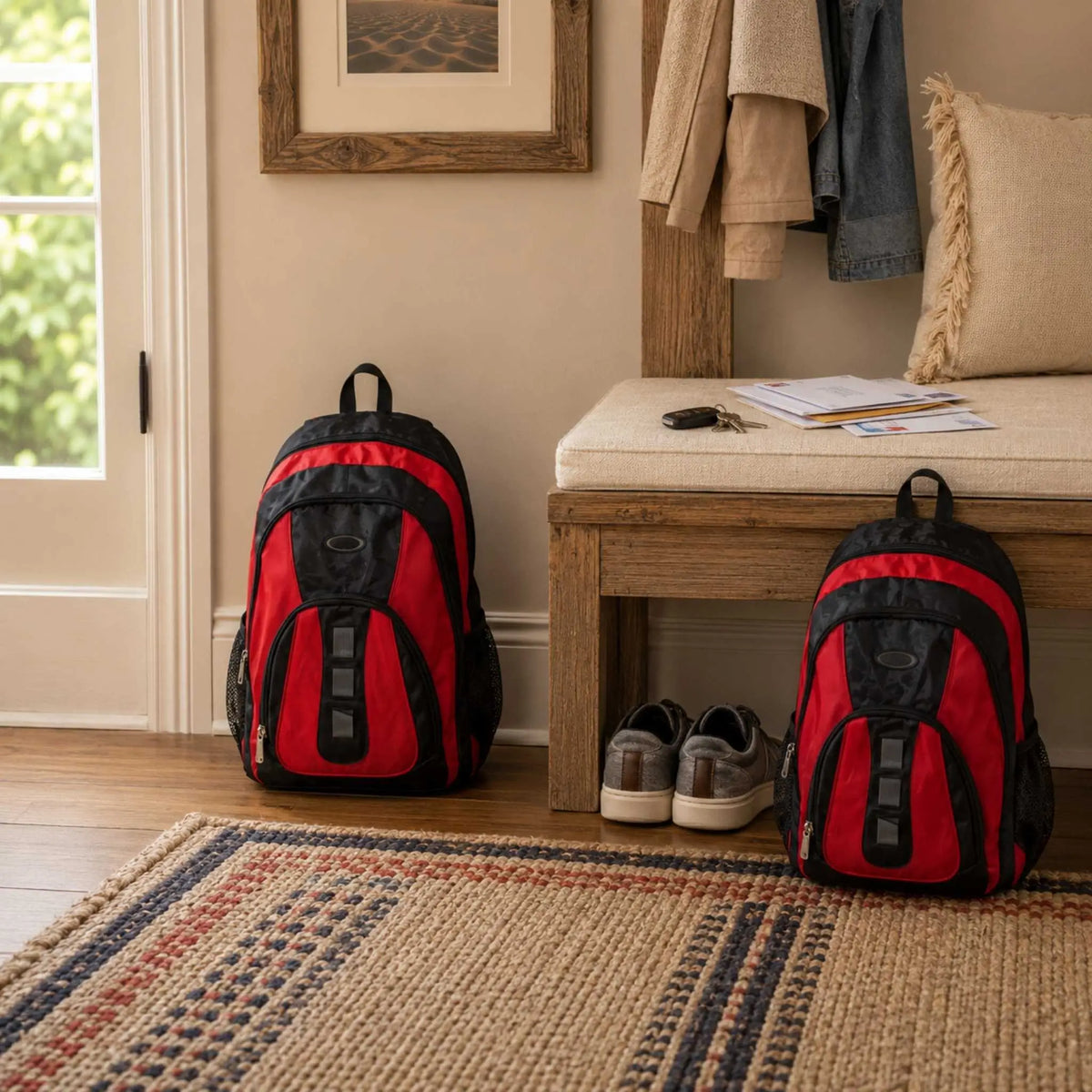
Compact, lightweight, and available in black or red, the RapidShield fits in a closet, under a desk, or in an office, wherever you need it most.

Like every kit we sell, this one sends $1 to the National Forest Foundation.

Preparedness doesn't have to be complicated. This is a good place to start.

Who This Kit Is For

For individuals, couples, families, and older adults who want dependable 72-hour emergency coverage at an accessible price point. The 2-person RapidShield can be a practical emergency kit for a senior living independently, especially when it is stored somewhere accessible without stairs.

The RapidShield is ideal as a first kit for households just getting started with preparedness, a second kit for an office or a relative's spare room, or a backup kit for another floor of the house. For a vehicle, our RoadReady kit is built for the temperature swings a parked car goes through.

What's Included

2-Person Kit

Organization: 1 Compact Backpack, 1 Weatherproof Poly Bag
Food & Water: 2- 3,600 kcal SOS Food Rations, 12- 4.2 oz Water Pouches, 1 Personal Water Filter
Shelter & Warmth: 2 Emergency Blankets, 2 Adult Ponchos
Survival Gear: 1 Signal Whistle, 2 Safety Goggles, 1 Duct Tape, 1 pack of Playing Cards, 1 Emergency Preparedness Guidebook, 1 Pencil, 1 Multitool Knife
Light & Communication: 1 Flashlight, 1 AM/FM Weather Band Radio, 2 Light Sticks
First Aid: 1 First Aid Kit
Hygiene & Sanitation: 2 Toothbrushes. 1 Toothpaste, 1 Comb, 1 Razor, 4 Shampoo, 1 Soap, 2 Feminine Pad, 1 Washcloth, 1 Toilet Paper Roll
_________________________
4-Person Kit


Organization: 2 Compact Backpacks, 1 Weatherproof Poly Bag
Food & Water: 4- 3,600 kcal SOS Food Rations, 24- 4.2 oz Water Pouches, 1 Personal Water Filter
Shelter & Warmth: 4 Emergency Blankets, 4 Adult Ponchos
Survival Gear: 1 Signal Whistle, 4 Safety Goggles, 1 Duct Tape, 1 Playing Cards, 1 Emergency Preparedness Guidebook, 1 Pencil, 1 Multitool Knife
Light & Communication: 1 Flashlight, 1 AM/FM Weather Band Radio, 4 Light Sticks
First Aid: 1 First Aid Kit
Hygiene & Sanitation: 4 Toothbrushes, 2 Toothpaste, 1 Comb, 1 Razor, 8 Shampoo, 1 Soap, 4 Feminine Pads, 1 Washcloth, 1 Toilet Paper Roll

Scenarios This Kit Covers

The RapidShield is built for the full range of emergencies households face:

Natural Disasters: Hurricanes, earthquakes, floods, wildfires, and winter storms. The poncho, emergency blanket, and weather band radio keep you protected and informed whether you're evacuating or sheltering in place.

Extended Power Outages: When the grid goes down, the flashlight, light sticks, and AM/FM radio keep you functional and connected to emergency alerts without relying on cell service or electricity.

Evacuation Scenarios: Pre-packed and organized so you can grab and go in under a minute. No assembly, no scrambling. Just pick it up and move.

Workplace Emergencies: Compact enough to keep in an office closet, under a desk, or on a storage shelf.

Boil Water Advisories: The straw filter removes bacteria and protozoa from tap water, but it can't reliably remove viruses. During a boil water advisory, follow your utility's instructions first, and pair the filter with purification tablets or boiling rather than relying on it alone. No filter makes water contaminated with chemicals or fuel safe to drink.

Pro Tips

Make It Yours!

Consider adding:

  • Stored water. Six gallons for two people over three days, twelve for four.
  • Medications. The American Red Cross recommends a seven-day supply.
  • Copies of important documents.
  • A phone charger and backup battery.
  • A comfort item for kids.
  • Glasses, contact lens supplies, and hearing aid batteries for anyone who uses them.

Tips:

Keep one where you spend the most time. The RapidShield's compact size makes it easy to keep one at home and one at the office, so you're covered wherever the day finds you. For the car, our RoadReady kit is built for the temperature swings a parked vehicle goes through.

Know what the filter does and doesn't do. Its 0.1-micron ultrafilter removes bacteria and protozoa such as Giardia and Cryptosporidium, and the carbon filter improves taste and odor. It can't reliably remove viruses, so it is a filter rather than a purifier.

Add purification tablets or drops. They cost very little and cover the viruses a filter can't. That combination is what turns found water into water you can be confident about.

Run it once at the sink, so the first time isn't during an emergency. It filters about half a liter a minute, so a gallon takes around eight minutes.

Check it twice a year. The SOS food rations and water pouches carry a 5-year shelf life, but make it a habit to inspect the kit every six months. Check the batteries, replace anything used from the first aid kit, and update personal items as your family changes. Pairing it with daylight saving time means you never have to remember a date.

Black or red? Choose black if you'd rather the kit not stand out in an office or a shared space. Choose red if you want to spot it fast in a dim closet or during a power outage.

Wildfire season? Tuck in a NIOSH-marked N95 for each adult, and for any older child it seals well on, plus a paper map of your evacuation routes. Respirators are not made in child sizes, so for younger children the plan is filtered indoor air and leaving early. There's room in the backpack for both.

Living alone? Each SOS ration is a three-day supply for one person, so the 2-person kit gives one person about six days of food.

Flying with it? Pack it in checked luggage. The multitool's knife isn't allowed in a carry-on, which matters if you're hand-delivering a kit to family.

Size & Storage

2-Person Kit: 1 compact backpack, available in Black or Red, 12 lbs, 19" x 14" x 6". 4-Person Kit: 2 compact backpacks, available in Black or Red, 21 lbs total, each pack 19" x 14" x 6". The load splits between two people, though the contents are not divided evenly. Some items come as singles rather than pairs, so open both packs when your kit arrives and redistribute them. Store this one indoors: a hall closet, under a bed, or an interior room. Water filters are degraded by freezing and by the heat a parked car reaches in summer, so a vehicle, an unheated garage or an attic are all poor choices. For the car, our RoadReady kit is built for those conditions.

Good to Know...

How much water does a family need in an emergency?

Ready.gov recommends at least one gallon per person per day, for drinking and sanitation. For two people over three days, that's six gallons, or about 50 pounds. No backpack carries that, so the practical plan has two parts:

  • Store water at home.
  • Carry a way to make more water drinkable.

The RapidShield's personal water filter handles the second part.

How long should an emergency kit last?

Seventy-two hours is the starting point, not the finish line. It's the widely used planning standard because it covers the gap before outside help usually arrives. To go longer, build outward with shelf-stable foods your family already eats and rotate through them. That gets you further than waiting for a two-week setup and having nothing in the meantime.

Do emergency food rations need cooking?

No. Ration bars like the RapidShield's are ready to eat straight from the package, with no stove, boiling or water needed. Freeze-dried meals usually taste better, but they need heat and clean water, the two things hardest to come by in an outage. The bars taste closer to a dense coconut cookie than a meal, and most kids will eat one without a fight.

The RapidShield is the 72-hour starting point, packed and ready. The rest of your plan can grow from there at your own pace.

Source: Ready.gov, FEMA's preparedness campaign, Water.

What does 72-hour mean?

The RapidShield is a pre-packed 72-hour emergency survival kit backpack for two or four people. It covers the first three days of an emergency, with three days of emergency food rations, about 1,200 calories per person per day, and supplies to help with water.

In this kit: About 25 oz of drinking water per person and a personal water filter.

What you'll still need to add. Stored water is what makes this a full three-day emergency kit. Ready.gov, FEMA's preparedness campaign, recommends one gallon of water per person per day. That's 6 gallons for two people over three days, or 12 for four. Add that, along with medications, personal necessities, and anything else your household relies on.

About water supplies. Purification tablets and filters treat water you already have; they don't create it, and tablets don't remove chemical contamination. A storage container only helps if it's filled ahead of time. None of these eliminate the need to plan for a safe drinking-water supply.

View full details
72-Hour Emergency Survival Kit - The RapidShield $101.95