Skip to product information
1 of 9

72-Hour Emergency Kit for Two or Four - The SideBySide

72-Hour Emergency Kit for Two or Four - The SideBySide

Regular price $79.95 USD
Regular price Sale price $79.95 USD
Sale Sold out
Household Size
Quantity

Ships in 1–3 business days • 30-day returns • Free shipping over $100

Product Highlights

  • 72-hour emergency kit in one backpack, in a two-person size and a four-person size
  • A 3,600-calorie food bar for each person, divided into 18 individually wrapped pieces, with a shelf life of up to five years
  • Six 4 oz water pouches, ten water treatment tablets, and a 1-liter hydration bag with straw per person
  • Hand-rechargeable flashlight that needs no batteries
  • AM/FM radio with batteries included
  • An emergency blanket, a poncho, and a hand and body warmer for each person
  • First aid kit for minor cuts and scrapes, with latex-free bandages
  • 5-in-1 emergency whistle with a compass and signal mirror
  • 52 survival playing cards for long hours without power
  • A starter water supply, not a full three days, so store additional water at home alongside it
  • Hand-assembled in the USA, designed with advice from emergency preparedness experts
  • 18" × 10" × 10" in both sizes. 14 lbs for two, 18 lbs for four

Maybe it's the two of you in a quieter house now that the kids have moved out. Maybe it's a family of four, a first apartment, or a parent's home you'd like to see covered. The question is the same either way. If the power went out and the roads stayed closed for a few days, what would you reach for?

The SideBySide is a 72-hour emergency kit packed into one backpack, in a two-person size and a four-person size. Food, a starter supply of water, a way to treat more, light, a radio, first aid, and warmth are all in one place instead of spread across the house.

Why the SideBySide is a good fit:

Food for three days. A 3,600-calorie food bar for each person, divided into 18 individually wrapped pieces, so it's easy to portion across three days. They need no cooking, taste like shortbread, carry a shelf life of up to five years, and meet U.S. Coast Guard requirements, according to the manufacturer.

A starter supply of water, and a way to treat more. Six 4 oz water pouches per person, also rated for up to five years, cover the first hours. Ten water treatment tablets per person each treat one liter, and everyone gets a 1-liter hydration bag with a straw to fill and drink from.

Light and news without the grid. A hand-rechargeable flashlight needs no batteries. An AM/FM radio, with batteries included, keeps you on local news and emergency broadcasts.

Warmth and weather cover for everyone. An emergency blanket, an emergency poncho, and a hand and body warmer for each person.

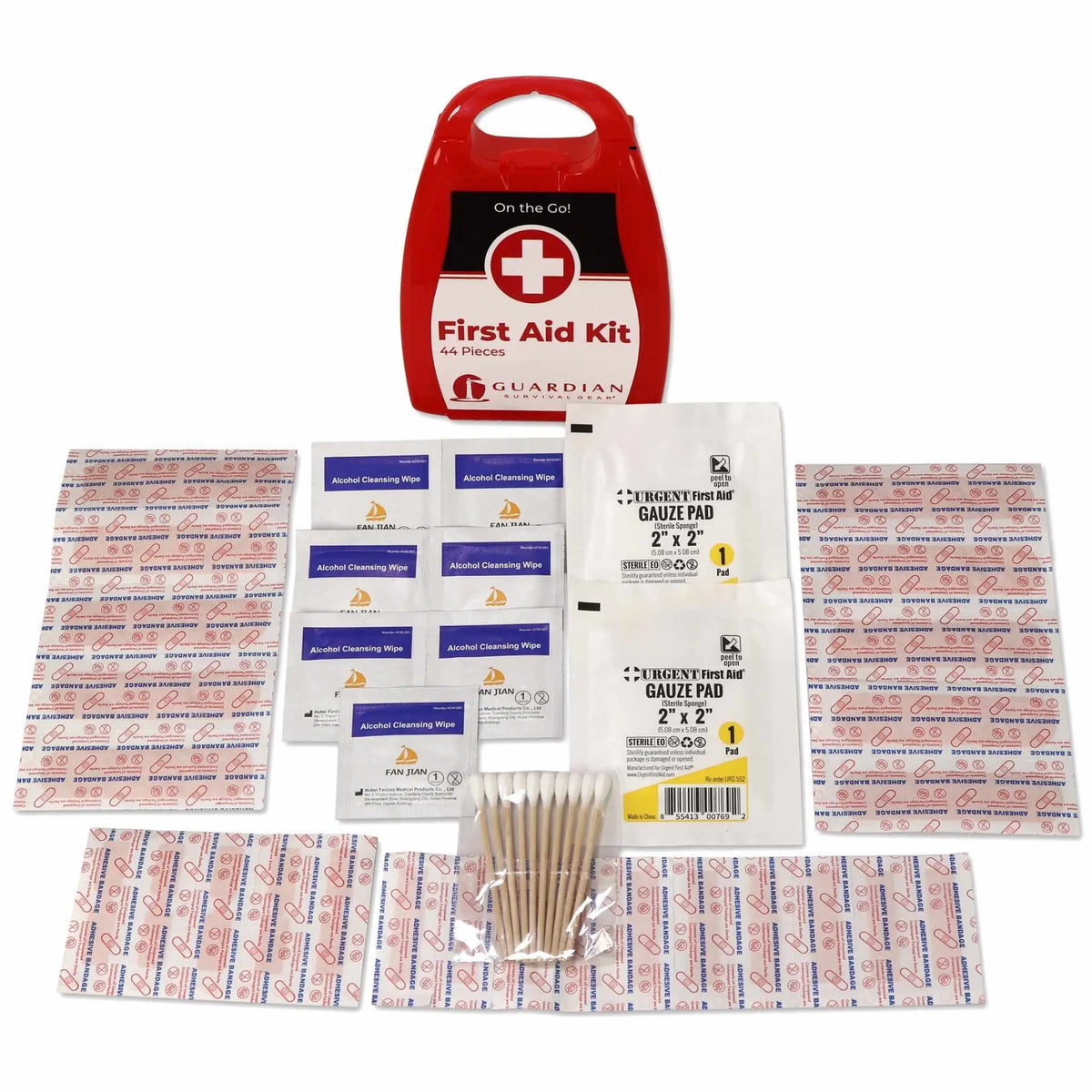
First aid for minor cuts and scrapes. A compact first aid kit in a hard case with a carry handle holds alcohol cleansing pads, adhesive bandages in two sizes, butterfly bandages, gauze pads, and cotton swabs. The bandages are latex-free.

A whistle to signal for help. A whistle is on Ready.gov's basic emergency kit list. This one also holds a compass, a signal mirror, and a small waterproof container, all on a lanyard.

Everyday hygiene. A pack of pocket tissues for each person, plus nine wet wipes and three disposable face masks per person.

Something to pass the time. A deck of 52 survival playing cards, each illustrating a survival skill.

What it doesn't cover. This kit carries a starter supply of water, not three days' worth. Ready.gov, FEMA's preparedness campaign, recommends one gallon per person per day. That's six gallons for two people over three days, or twelve for four, so keep stored water at home alongside the kit. Here's why no kit includes three days of water.

The SideBySide is hand-assembled in the USA. It was designed with advice from emergency preparedness experts and follows guidelines from government agencies and nonprofit preparedness organizations.

Every item we sell sends one dollar to the National Forest Foundation, and the SideBySide is no exception.

Three days of food, light, and first aid, packed and ready in one bag.

Who This Kit Is For

This kit is for households that want the basics covered without building a kit piece by piece: couples, families of four, roommates, empty nesters, and anyone setting up a first place of their own.

It also works well for a parent's or grandparent's home. The water treatment tablets drop into a hydration bag with no pumping or tools. At 14 to 18 pounds, though, think about who will be lifting it, and store it at an easy height.

Choosing your size

  • One or two people: the 2-Person kit. One person gets a second set of food and supplies to spare.
  • Three or four people: the 4-Person kit.
  • Five or more: the 4-Person kit, plus a food bar, blanket, poncho, warmer, and hydration bag for each additional person.

What's Included

Organization

1 Backpack (red and gray)

Food & Water (2-Person / 4-Person)

Food Bars, 3,600 calories each: 2 / 4
Water Pouches, 4 oz each: 12 / 24
Water Treatment Tablets, each treats 1 liter: 20 / 40
Hydration Bags with Straw, 1 liter each: 2 / 4

Shelter & Warmth (2-Person / 4-Person)

Emergency Blankets: 2 / 4
Emergency Ponchos: 2 / 4
Hand/Body Warmers: 2 / 4

Hygiene (2-Person / 4-Person)

Packs of Pocket Tissues: 2 / 4
Wet Wipes: 18 / 36
Disposable Face Masks: 6 / 12

In both sizes

1 AM/FM Radio (batteries included)
1 Hand-Rechargeable Flashlight (no batteries required)
1 First Aid Kit in a hard case with carry handle, containing:
Adhesive bandages in two sizes (latex-free)
Butterfly bandages
Gauze pads (2" × 2")
Alcohol cleansing pads
Cotton swabs
1 5-in-1 Emergency Whistle (compass, signal mirror, flint starter, waterproof container, and lanyard)
1 Flint Starter
1 Deck of Survival Playing Cards (52 cards illustrating survival skills)

Not included: a full three-day water supply, sanitation supplies, medications, or first aid gloves and tape.

What You'll Still Want to Add

  • Water. Ready.gov, FEMA's preparedness campaign, recommends one gallon per person per day. That's six gallons for two people over three days, or twelve for four.
  • Medications. The American Red Cross recommends a seven-day supply, along with any medical items you rely on.
  • First aid extras. Disposable gloves and medical tape round out the included kit.
  • Sanitation supplies. Garbage bags and plastic ties are on Ready.gov's basic kit list.
  • A phone charger and backup battery.
  • A second flashlight, so more than one person has light.
  • Copies of important documents.
  • Glasses, contact lens supplies, and hearing aid batteries for anyone who uses them.

Scenarios This Kit Covers

  • Power outages. A flashlight, a radio, and food that needs no cooking cover the basics. The warmers and blankets help if the heat goes out too.
  • Winter storms. An emergency blanket and a hand and body warmer for each person, plus food that needs no stove.
  • Water service disruptions. The tablets and hydration bags give you a way to treat water. Your local utility's instructions come first, so follow them and the tablet package directions together.
  • Evacuation. Everything is in one backpack, ready to grab on the way out the door.
  • A kit for someone you love. A parent, a grandparent, or an adult child in a first apartment can all use one, with everything for two or four in a single bag.

Pro Tips

  • Check the dates when it arrives. The food bars and water pouches carry a shelf life of up to five years. Note the dates and set a reminder for the year they're due.
  • Store water beside it. Six gallons covers two people for three days, and twelve covers four. Keep it on the same shelf or in the same closet.
  • Read the tablet directions now. Knowing the steps and wait time ahead of time makes the tablets easy to use when you need them.
  • Test the flashlight and radio twice a year. Pair the check with the spring and fall clock changes, and replace the radio batteries as needed.
  • Know your radio. This is an AM/FM radio, not a NOAA weather radio. If severe weather is common where you live, a NOAA weather radio brings watches and warnings directly.
  • Keep it where it's easy to reach. At 14 to 18 pounds, a closet floor or low shelf near an exit works better than a high shelf.
  • Know what the first aid kit covers. It's built for cuts and scrapes. It has no gloves, tape, cold pack, or burn supplies, so add those to your home supplies if you want them on hand.

Size & Storage

Both sizes measure 18" × 10" × 10". The 2-Person kit weighs 14 lbs and the 4-Person kit weighs 18 lbs, so the larger bag is simply packed fuller. Either one fits a coat closet floor, a hall closet shelf, or the space under a bed. Indoors is best. A parked car or an unheated garage runs hot in summer and cold in winter, which is hard on food, water, and batteries.

Good to Know...

Common question: "Does this kit have enough water for three days?"

No, and no backpack kit does. Ready.gov recommends one gallon per person per day, and six gallons weighs about 50 pounds. The SideBySide gives you six water pouches per person, plus ten tablets per person that each treat a liter, which is a little over five gallons, once you have a water source. Store drinking water at home, and the kit covers everything else.

Common question: "Are the food bars allergy-friendly?"

The food bars are made with wheat and barley flour and are coconut flavored, so they are not gluten-free. They are made without peanut products. If anyone in your household has food allergies, plan on adding foods that work for them.

Common question: "How long does the kit last?"

The food bars and water pouches carry a shelf life of up to five years, so check the dates printed on them when the kit arrives. Check the flashlight and radio twice a year, and replace the radio batteries as needed.

View full details
72-Hour Emergency Kit for Two or Four - The SideBySide $79.95